Commercial Vehicles Moved Without Further Damage
Heavy-Duty Towing in Taylor for disabled semi-trucks, trailers, and buses that can't move under their own power
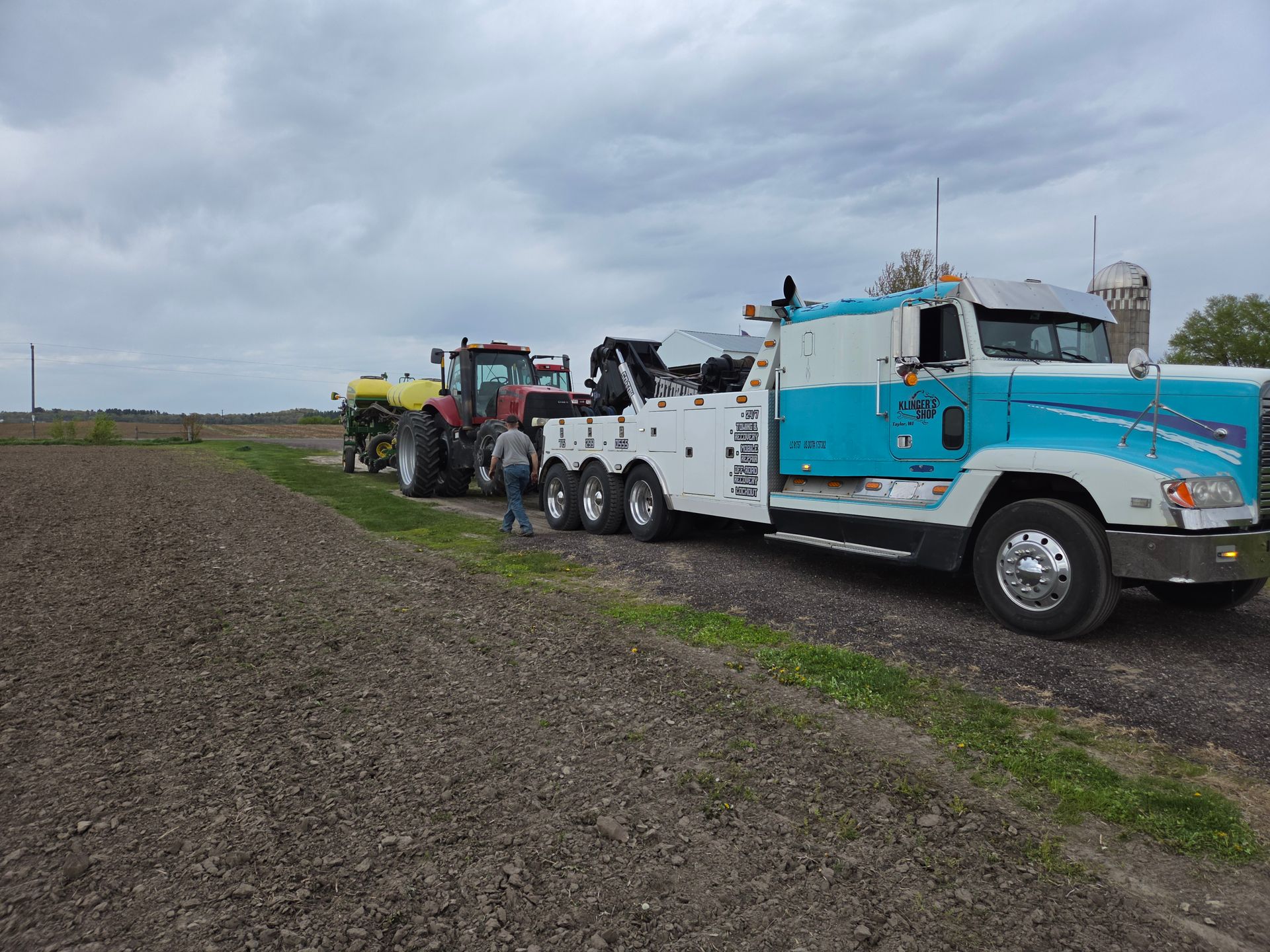
A transmission that seizes on Highway 29 or a truck that rolls off a shoulder during icy conditions requires specialized towing equipment that won't cause additional damage during transport. Klinger's Shop operates heavy-duty towing across Taylor and western Wisconsin, handling semi-trucks, loaded trailers, buses, and commercial vehicles disabled by mechanical failures, accidents, or off-road incidents. Standard light-duty tow trucks lack the capacity and rigging to safely move Class 8 vehicles, which means improper towing can bend frames, damage suspension components, or destroy drivetrains if the truck is dragged instead of lifted.
Towing methods depend on what failed and whether the truck has working brakes or steering—a blown engine allows flat-towing with the driveline disconnected, while locked brakes or steering failures require wheel-lift or underlift equipment to keep damaged axles off the pavement. Fast response along highways, county roads, and industrial properties reduces how long a disabled truck blocks traffic or sits exposed to weather, particularly during Wisconsin's winter months when stranded equipment can freeze solid overnight.
Call immediately if your truck is disabled and provide your exact location, the nature of the failure, and whether the vehicle is loaded or empty.
What Happens During Heavy-Duty Towing
Safe towing begins with assessing the disabled vehicle before rigging begins, because towing a truck with a locked differential or failed steering without proper precautions destroys components that might otherwise be repairable. Operators check whether wheels turn freely, if brakes release, and whether the truck can be shifted into neutral before deciding how to attach tow rigging. Underlift systems that engage the frame or axles prevent dragging tires, while driveline disconnects allow flat-towing without spinning a seized transmission.
After towing is complete, your truck arrives at the shop or destination without frame damage, bent suspension components, or additional drivetrain failures caused by improper transport. Cargo remains secure because professional rigging accounts for load weight and balance during movement, preventing shifts that could damage both the truck and the freight.
Heavy-duty towing covers accidents, breakdowns, and recovery situations, but off-road extractions where trucks are stuck or overturned require winching and specialized recovery equipment beyond standard towing capabilities. Pricing depends on vehicle size, towing distance, and whether additional equipment like escorts or permits are required for oversized loads.
Common Concerns for Stranded Drivers
Owner-operators and fleet managers dealing with disabled trucks need clarity on towing procedures and what happens to equipment during transport.
What's the difference between heavy-duty towing and standard roadside assistance?
Heavy-duty towing moves vehicles that can't drive under their own power, using specialized equipment rated for commercial vehicle weight. Roadside assistance handles repairs that get trucks running again without towing—jump-starts, tire changes, or minor mechanical fixes performed on-site.
How are loaded trailers handled during towing?
Loaded trailers require additional considerations for weight distribution and braking, and some situations require unloading cargo before the truck can be safely towed. If unloading isn't possible, towing speed and route selection change to account for the additional weight and prevent load shifts.
Why does towing take longer during winter weather in Taylor?
Ice, snow, and freezing temperatures make rigging more difficult and slow towing speeds for safety. Frozen components like brakes and steering systems may need thawing before towing can proceed, and roads that are unsafe for standard traffic require even more caution with a towed vehicle.
What information speeds up heavy-duty towing dispatch?
Providing the exact breakdown location using highway markers or GPS coordinates, describing what failed mechanically, stating whether the truck is loaded, and noting any traffic hazards helps dispatchers send the right equipment and plan the safest approach.
How is towing handled for trucks involved in accidents versus mechanical breakdowns?
Accident towing often requires coordination with law enforcement, clearance from investigators before the vehicle can be moved, and documentation of the truck's condition before rigging begins. Mechanical breakdowns allow faster dispatch because there's no investigation or scene management involved.
Klinger's Shop maintains heavy-duty towing equipment rated for the commercial trucks and agricultural haulers operating across western Wisconsin. Call for emergency towing assistance and describe the situation your vehicle is in so the right equipment reaches you.