Surface Preparation That Determines Coating Longevity
Sandblasting and Painting in Taylor for trailers, heavy equipment, and metal components requiring rust removal and protective coatings
Western Wisconsin's winter road salt and summer humidity create conditions where trailer surfaces develop rust that spreads beneath intact paint, compromising metal integrity before visual inspection reveals the extent of corrosion. Klinger's Shop provides sandblasting and painting for trailers, commercial vehicles, heavy equipment, and metal components across Taylor, using abrasive media to remove rust, old paint, and surface contaminants before applying protective coatings. Surface preparation determines whether new paint adheres properly and protects underlying metal or fails within months due to inadequate cleaning and profiling.
The service addresses restoration work for trailers showing visible rust, heavy equipment with deteriorating finishes, truck components exposed to corrosive road chemicals, and agricultural machinery where protective coatings have worn through to bare metal. Proper preparation involves removing all corrosion and coating failures back to clean metal, creating surface profiles that allow mechanical adhesion for primer and topcoat layers, and addressing contamination that would prevent proper paint bonding.
Request evaluation for equipment requiring surface restoration and protective coating application.
Why Proper Preparation Extends Coating Life
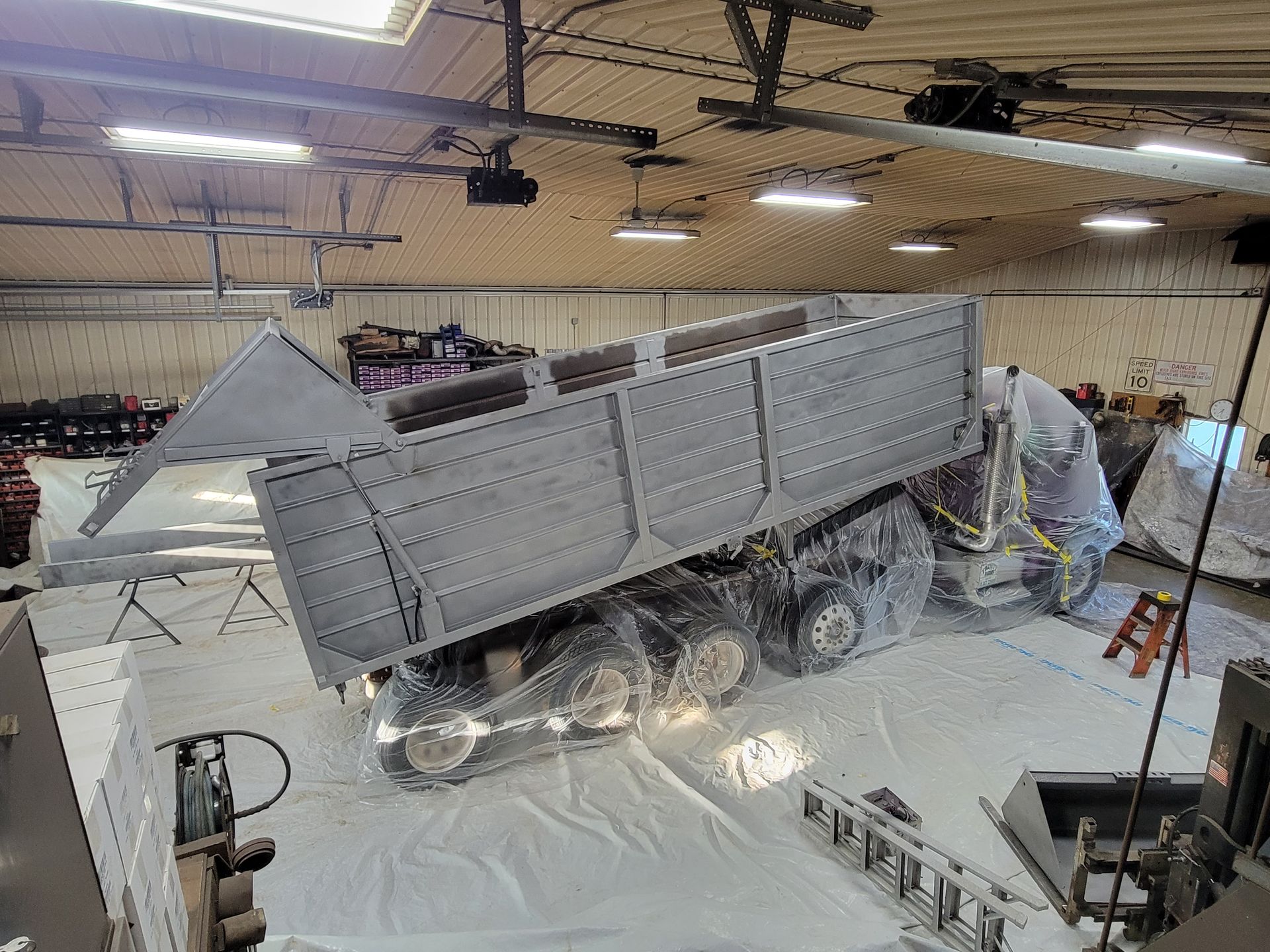
Sandblasting uses abrasive media propelled at high velocity to mechanically remove rust, mill scale, old paint layers, and contaminants from metal surfaces, creating the clean substrate and surface texture necessary for coating adhesion. The process exposes the full extent of corrosion hidden beneath failing paint, allowing technicians to assess whether metal loss requires welding or reinforcement before protective coatings are applied. After blasting, surfaces receive primer formulated to inhibit rust formation and topcoats selected for durability under the equipment's operating conditions.
Equipment shows restored professional appearance, trailers display uniform color and finish that reflects well on commercial fleets, and metal components gain protection against ongoing corrosion from road salt, moisture exposure, and chemical contact. The coating system bonds mechanically to the prepared surface rather than relying solely on chemical adhesion, which means finishes resist chipping and peeling under operational stress and extend the interval before rust reappears at panel edges or damage points.
Work includes attention to detail in masking areas where paint should not appear, addressing welds and repairs before coating application, and ensuring proper cure times before equipment returns to service. Restoration benefits trucking companies maintaining professional fleet appearance, agricultural operators protecting expensive equipment from accelerated corrosion, and industrial businesses extending machinery service life through proper surface protection.
What Operators Ask About Surface Preparation
Equipment owners and fleet managers considering restoration work often need clarity on the preparation process, coating selection, and how surface treatment affects long-term equipment condition and appearance.
What makes sandblasting necessary instead of sanding or wire brushing?
Sandblasting removes rust and corrosion from complex surfaces, recesses, and areas that hand tools cannot reach effectively, creates uniform surface profile across the entire component for consistent paint adhesion, and exposes hidden corrosion that would continue spreading beneath new coatings if not fully removed during preparation.
How does surface preparation affect how long new paint lasts?
Paint applied over properly blasted surfaces bonds mechanically to the metal substrate and resists failure from moisture intrusion or impact damage, while coatings applied over inadequately prepared surfaces fail quickly as rust continues spreading beneath the paint layer and adhesion remains purely chemical rather than mechanical.
When should equipment receive sandblasting and recoating?
Visible rust spreading across panels, paint that chips or peels revealing bare metal underneath, corrosion at weld seams or panel joints, and situations where equipment appearance affects professional image or resale value all indicate that surface restoration would protect the underlying metal and extend equipment life.
What types of coatings work best for trailers operating around Taylor?
Primers containing rust inhibitors address the moisture and road salt exposure common in western Wisconsin winters, topcoats formulated for impact resistance handle gravel and debris contact during highway operation, and proper cure times ensure coatings reach full hardness before equipment returns to loaded service.
How long does the sandblasting and painting process typically require?
Duration depends on equipment size, the extent of rust and coating failure requiring removal, whether welding or metal repair precedes painting, and cure times needed for applied coatings to reach sufficient hardness for the equipment to return safely to operational service without finish damage.
Sandblasting and painting services from Klinger's Shop restore equipment appearance and provide corrosion protection for commercial vehicles, trailers, and heavy machinery throughout Taylor. Contact the shop to discuss surface preparation and coating needs for equipment showing rust or deteriorated finishes.