Cracked Frames Require Structural Repair Work
Welding and Fabrication in Taylor for damaged trailer structures, cracked frames, and custom metalwork supporting commercial transportation equipment
Trailer frames develop stress cracks where cross-members meet longitudinal rails, particularly in equipment that hauls agricultural loads over uneven field access roads. Welding and fabrication services at Klinger's Shop address structural repairs for commercial trucks, trailers, heavy equipment, and metal components used throughout Taylor's trucking, farming, and industrial sectors. Both mobile welding for field repairs and shop-based fabrication provide options depending on whether equipment can be transported or requires on-site attention due to size or operational constraints.
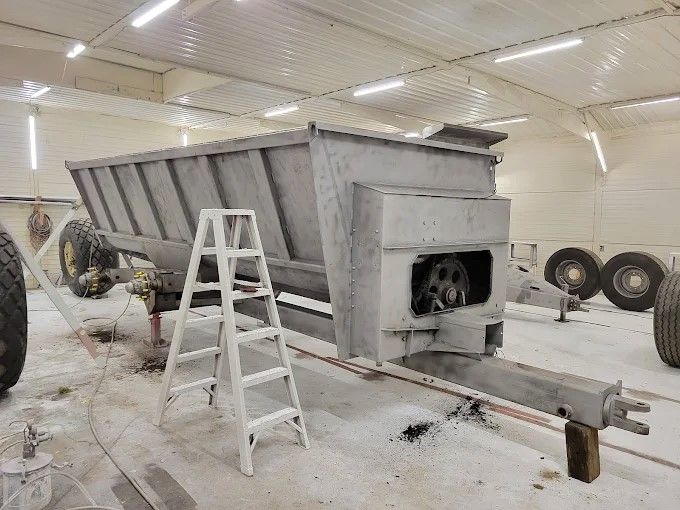
The service handles cracked frames that compromise load-bearing capacity, damaged trailer structures from rollover incidents, broken mounting brackets on agricultural equipment, and custom fabrication for specialty applications where off-the-shelf components do not fit specific operational needs. Repair work focuses on restoring structural integrity using techniques appropriate for the metal type, load requirements, and operating conditions the equipment will face after welding is completed.
Schedule fabrication work or mobile welding assessment to address structural damage affecting equipment reliability.
What Proper Welding Accomplishes for Equipment
Welding begins with cleaning the damaged area to remove rust, paint, and contaminants that weaken weld penetration, followed by joint preparation that ensures full material contact and proper heat distribution during the welding process. Experienced fabricators select filler materials matched to the base metal composition and choose welding techniques based on material thickness, joint accessibility, and whether the repair occurs in a controlled shop environment or field conditions where wind and temperature affect weld quality.
After welding, trailer structures regain load-bearing capacity without flexing at previously cracked points, frames support equipment operation without progressive failure spreading from the original damage site, and custom-fabricated components fit applications where standard parts would require extensive modification. Equipment operators notice restored structural soundness, extended service life for trailers and heavy machinery, and confidence that repaired components will handle operational stresses without immediate re-failure.
Fabrication work includes building custom mounting brackets for auxiliary equipment, repairing agricultural implement frames damaged during field operations, reinforcing trailer structures that show fatigue in high-stress areas, and creating specialized components for industrial applications. Mobile welding provides options when equipment cannot be transported due to size, weight, or operational necessity, bringing shop-level capabilities to farms, industrial sites, and locations where equipment remains in active use.
Common Questions About Welding Services
Equipment operators and fleet managers often need clarity on welding capabilities, material limitations, and whether repairs will hold under operational loads before committing to structural repair work.
What determines whether welding happens on-site or requires shop service?
Equipment size, whether the component can be safely removed, the complexity of the repair, and whether controlled environmental conditions are necessary for proper weld quality all affect whether mobile welding provides adequate capability or shop-based work becomes necessary for reliable results.
How does welding address cracked trailer frames without creating weak points?
Proper joint preparation removes damaged material back to sound metal, filler material matched to base metal composition provides uniform strength across the weld, and heat control prevents warping or brittleness that would create new failure points adjacent to the repair area.
When should operators choose welding repair over component replacement?
Welding makes sense when the damaged area represents localized failure in otherwise sound equipment, when replacement parts are unavailable or cost-prohibitive, or when custom fabrication addresses design weaknesses that contributed to the original failure and would recur with direct replacement.
What types of metal fabrication work supports commercial operations in Taylor?
Custom mounting brackets for auxiliary equipment, replacement cross-members for trailer frames, reinforcement plates for high-stress areas showing fatigue cracks, and specialty components designed for agricultural equipment operating in field conditions where standard parts lack necessary durability.
How long do welded repairs typically hold under operational loads?
Properly executed welds using appropriate filler materials and techniques provide strength equivalent to or exceeding the original base metal, meaning repaired areas should perform reliably throughout the remaining service life of the equipment unless new damage occurs from operational incidents or progressive wear in adjacent areas.
Welding and fabrication services from Klinger's Shop restore structural integrity to commercial transportation equipment, agricultural machinery, and heavy-duty components throughout the Taylor area. Request assessment for cracked frames, damaged structures, or custom fabrication needs affecting equipment reliability and operational safety.