Stuck Equipment Pulled Free Without Worsening Damage
Recovery and Winch-Out Service in Taylor for commercial vehicles trapped in mud, snow, ditches, and difficult terrain
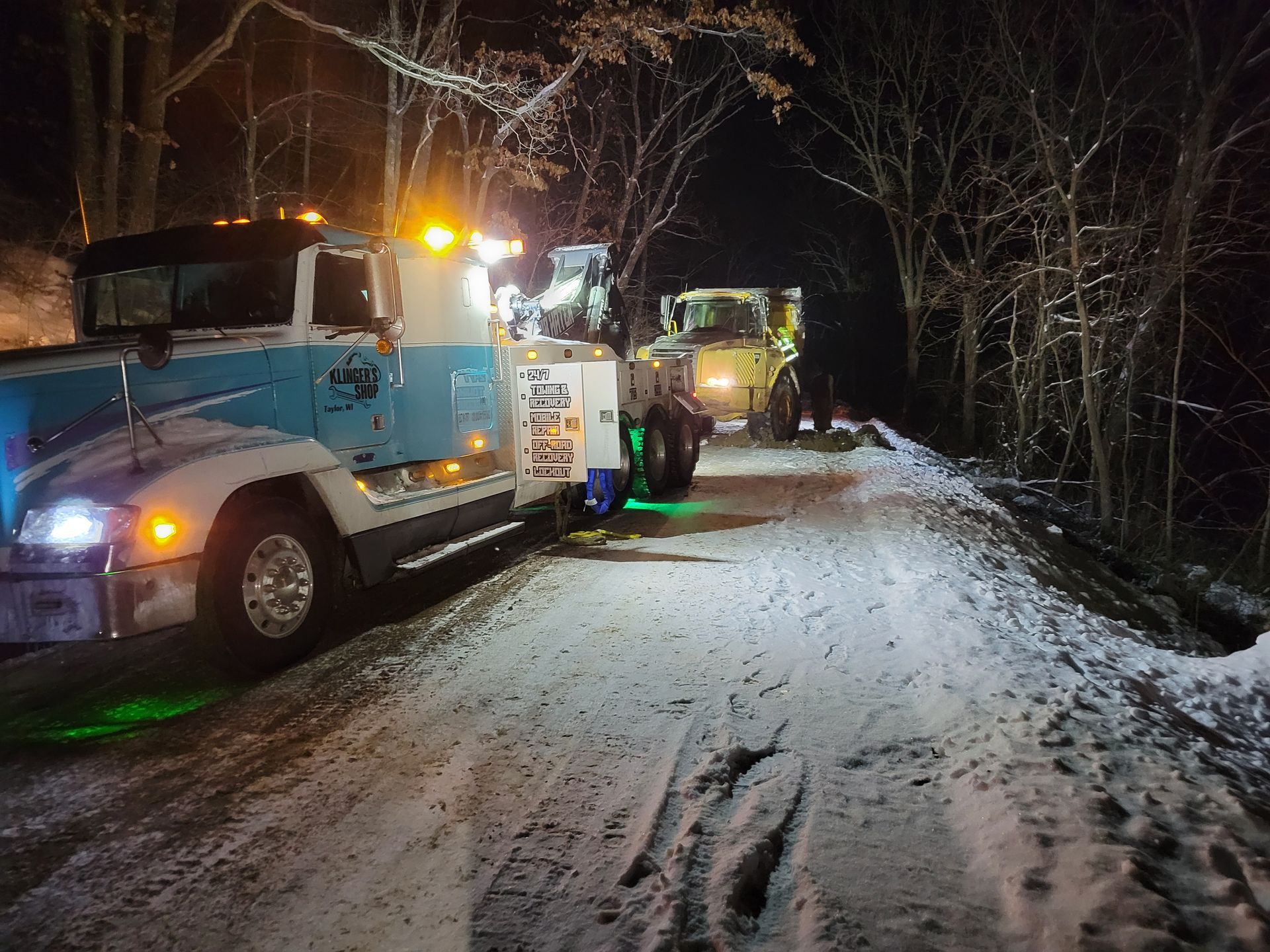
Spring thaws around Taylor turn farm access roads into mud pits that swallow loaded trucks, winter storms leave semis in ditches along Highway 29, and construction sites trap equipment when ground conditions collapse under weight. Recovery and winch-out service from Klinger's Shop extracts trucks, trailers, and commercial vehicles from situations where towing alone won't work because the vehicle is stuck, partially submerged, or positioned where rigging can't reach. A truck buried to its axles in saturated soil can't simply be pulled forward without damaging the frame, drivetrain, or suspension—proper recovery involves calculated pulling angles, ground anchors, and rigging that distributes force without bending components.
Recovery situations vary by terrain and how deeply the vehicle is stuck, with winching procedures adjusted based on soil conditions, available anchor points, and whether the truck is upright or tipped. Operators assess whether direct pulling will free the vehicle or if the ground needs stabilizing with mats, if multiple winch points are required to control direction, and whether additional equipment like excavators are needed to create clearance before pulling begins.
Request winch-out assistance by describing how the vehicle is stuck, what type of terrain surrounds it, and whether it's still accessible from a road or driveway.
What Changes After Professional Recovery
Winch-out operations begin by stabilizing the stuck vehicle and identifying safe pulling directions that won't roll the truck, snap rigging, or pull frame rails out of alignment. Heavy-duty recovery equipment handles the weight and resistance of loaded commercial vehicles, using multi-point rigging when single pulls would twist frames or overturn equipment, and recovery operators trained to recognize when pulling must stop and the approach must change to avoid causing structural damage.
Once recovery is complete, your truck or trailer sits on solid ground again, free from mud, snow, or ditch entrapment, with no additional frame damage or suspension failures caused by improper extraction. The vehicle can be assessed for mechanical issues that may have contributed to or resulted from the incident—brake failures that caused the slide, steering damage from impact, or drivetrain problems that prevented the truck from powering out before becoming fully stuck.
Severe weather conditions during Wisconsin winters increase recovery difficulty because frozen ground limits anchor placement, snow conceals terrain hazards, and sub-zero temperatures make rigging brittle and harder to handle safely. Some recoveries require waiting for improved conditions or bringing in additional equipment rather than risking operator safety or worsening vehicle damage.
Answers to Frequent Service Questions
Drivers and fleet managers dealing with stuck vehicles need to understand how recovery procedures work and what affects response times.
What determines whether a stuck truck needs winching versus towing?
If the vehicle is on solid ground but disabled, towing moves it without winching. If it's stuck in mud, snow, or off pavement where tires have no traction, winching is required to pull it back to stable ground before towing can proceed.
How do operators avoid causing additional damage during recovery?
Proper rigging distributes pulling force across frame points designed to handle stress, rather than attaching to bumpers or suspension components that will bend. Pull angles are calculated to move the vehicle along its strongest axis, and pulling stops immediately if frame flexing or component failure becomes apparent.
Why do some recoveries require multiple winch points?
Single-point pulling works when the vehicle is stuck straight and the ground is uniform, but trucks trapped at angles or partially tipped need multi-point rigging to control direction and prevent rolling during extraction. Additional rigging also distributes force when resistance exceeds what a single winch line can safely handle.
What delays recovery operations in rural areas around Taylor?
Access limitations when stuck vehicles sit far from roads, unstable ground that won't support recovery equipment, and lack of nearby anchor points for winching all extend recovery time. Operators sometimes need to build access paths or bring portable anchors before pulling can begin.
How does loaded cargo affect winch-out procedures?
A loaded truck weighs significantly more and requires stronger rigging and pulling capacity, but unloading cargo in a field or ditch isn't always possible. Recovery operators adjust equipment and techniques based on total weight, and some situations require partial unloading before extraction is safe.
Klinger's Shop responds to recovery situations across highways, rural properties, industrial sites, and agricultural operations throughout western Wisconsin, bringing specialized equipment for complex extractions. Contact the shop immediately if your commercial vehicle is stuck and unable to move under its own power.